


Phytoestrogens have attracted plenty of attention as a “natural” way to support the body during menopause. They are found in everyday foods such as soy, flaxseed, chickpeas and lentils, but their name can make them sound more hormone-like than they really are.
So, what do phytoestrogens actually do? Can eating more of them ease hot flushes? And are they safe?
The short answer is that phytoestrogen-rich foods can be a nutritious part of a balanced diet. Some research suggests that soy isoflavones may modestly reduce hot flushes for some people, but results are inconsistent and phytoestrogens are not a replacement for oestrogen or proven menopause treatment.
What are phytoestrogens?
Phytoestrogens are naturally occurring plant compounds with a chemical structure similar to oestrogen. This allows them to bind, usually quite weakly, to some of the same receptors as the oestrogen made by the body.
However, “similar” does not mean “the same”. Phytoestrogens are much weaker than human oestrogen. Depending on the tissue, the amount consumed and a person’s metabolism, they may produce a mild oestrogen-like effect or compete with the body’s own oestrogen at a receptor.
People also process phytoestrogens differently. Gut bacteria help transform these compounds into forms the body can absorb, so two people eating the same meal may not produce or absorb exactly the same metabolites. This may be one reason studies do not always produce consistent results.
The three main types of phytoestrogens
There are several families of phytoestrogens, but three are most relevant in food and supplements.
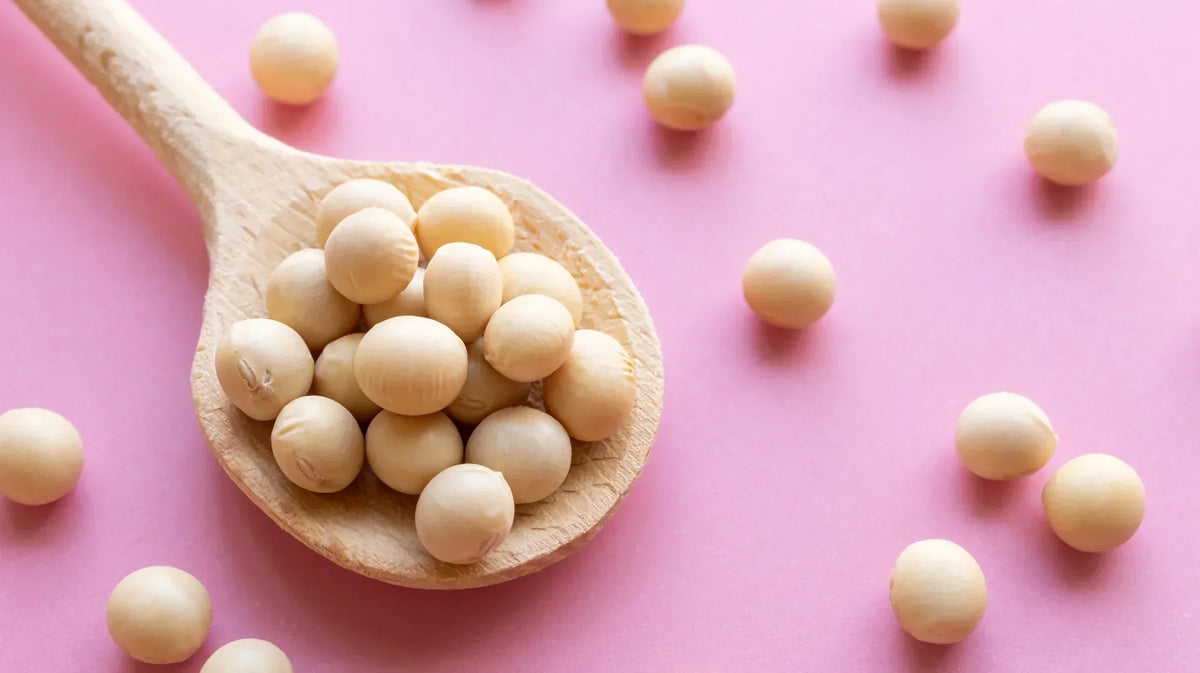
Isoflavones Isoflavones are concentrated in soybeans and soy foods. The main soy isoflavones are genistein, daidzein and glycitein.
Good food sources include:
- tofu, tempeh, edamame and soya drinks
- soybeans and soy flour
- chickpeas
- lentils and other pulses, in smaller amounts
Red clover is also rich in isoflavones, particularly biochanin A and formononetin. It is generally used as a standardised extract in supplements rather than eaten as an everyday food.
Lignans Lignans occur in many fibre-rich plant foods. Gut bacteria convert plant lignans into enterolignans, which can interact weakly with oestrogen receptors.
Good sources include:
- flaxseed (linseed), one of the richest dietary sources
- sesame seeds
- wholegrains, including rye, oats and barley
- pulses, including lentils and chickpeas
- berries, apples and some vegetables
Coumestans
Coumestans are less common in the diet. The best-known is coumestrol.
Sources include:
- alfalfa sprouts
- clover sprouts
- split peas and some other legumes
The amount can vary considerably with the variety, growing conditions and whether a seed has sprouted, so food-composition figures are only estimates.

Top phytoestrogen foods and practical amounts
There is no official daily target for phytoestrogens, and “more” is not necessarily better. A practical food-first approach is to include one or two phytoestrogen-rich foods most days while keeping the overall diet varied.
| Food | Practical portion | Main phytoestrogen type | Easy way to use it |
|---|---|---|---|
| Calcium-set tofu | 100–150 g | Isoflavones | Stir-fry, curry or grain bowl |
| Tempeh | 75–100 g | Isoflavones | Slice into wraps or salads |
| Edamame | 80–100 g | Isoflavones | Add to salads, soups or noodles |
| Unsweetened, fortified soya drink | 200–250 ml | Isoflavones | Use on cereal or in a smoothie |
| Ground flaxseed | 1–2 tablespoons (10–20 g) | Lignans | Stir into porridge or yoghurt; increase gradually |
| Cooked chickpeas | 100–120 g (about ½ tin drained) | Isoflavones and lignans | Hummus, salads or stews |
| Cooked lentils | 100–150 g | Mainly lignans, with smaller amounts of isoflavones | Soup, dhal or bolognese |
| Sesame seeds or tahini | 1–2 tablespoons (10–30 g) | Lignans | Dressings, dips or toast |
| Alfalfa or clover sprouts | A small handful (about 25–40 g) | Coumestans | Add to sandwiches or salads* |
Table to show which foods are the best sources of isoflavones.
*Raw sprouts can carry harmful bacteria. People who are pregnant, older or immunocompromised and young children may be advised to avoid raw sprouts; follow local food-safety guidance.
The phytoestrogen content of foods can vary by crop, processing method and brand. For that reason, it is more useful to think in servings than to chase an exact milligram target.
A simple day might include fortified soya drink at breakfast, chickpeas or lentils at lunch, and a tablespoon of ground flaxseed added to yoghurt or porridge. You do not need to eat every food on the list or eat soy if it does not suit you.
Can phytoestrogens help with menopause symptoms?
Possibly, but expectations should be realistic.
Research has focused mainly on soy isoflavones and hot flushes. Some trials and reviews report a small reduction in hot-flush frequency or severity; others find little or no meaningful difference. Benefits, where they occur, may take several weeks and appear to vary between individuals and products.
This is why guidance can sound mixed. The US National Center for Complementary and Integrative Health says soy protein or soy isoflavone supplements may help hot flushes, but that the effect may be small and findings are not fully consistent. The Menopause Society’s evidence review does not recommend soy products or herbal remedies as treatments for vasomotor symptoms because the evidence is not sufficiently reliable.
That does not make phytoestrogen foods pointless. Soy foods, pulses, seeds and wholegrains also provide protein, fibre, unsaturated fats and micronutrients. Eating them can support the quality of the diet even if they do not noticeably change menopause symptoms.
For a broader way to build meals around plants, protein and healthy fats, read our Mediterranean diet for menopause guide.
You can also explore the [Hormone Hub — link to be added when live] for more support across the menopause transition.
Are phytoestrogens safe?
For most people, normal portions of phytoestrogen-rich foods are considered safe as part of a varied diet. Human evidence does not show that eating soy foods raises cancer risk. Current cancer guidance generally distinguishes traditional soy foods from concentrated isoflavone supplements, for which there is less certainty.
A few points are worth knowing:
Soy allergy: Anyone with a soy allergy should avoid soy-containing foods and check labels carefully.
Digestive symptoms: A sudden increase in pulses, seeds or soy can cause bloating. Increase fibre gradually and drink enough fluid.
Thyroid medication: Soy can reduce the absorption of levothyroxine if consumed too close to the dose. It does not usually need to be avoided altogether, but follow the timing advice from your pharmacist or clinician and keep your intake reasonably consistent.
Hormone-sensitive conditions: If you have, or have previously had, a hormone-sensitive cancer or are taking medicines such as tamoxifen, ask your oncology team before using a concentrated phytoestrogen or red-clover supplement. This is different from automatically avoiding soy foods.
Pregnancy or breastfeeding: Avoid using concentrated red-clover or isoflavone supplements unless a qualified healthcare professional says they are appropriate.
Medicines and surgery: Herbal extracts may interact with medication. Check with a pharmacist or clinician, particularly if you use anticoagulant or antiplatelet medicines or have surgery planned.
What about phytoestrogen supplements?
Supplements can provide a much more concentrated and standardised dose than food, so evidence about tofu or lentils cannot automatically be applied to a capsule. Product quality, extract type and dose also vary.
Female Hormone Support contains red clover, a plant naturally rich in isoflavones, alongside hops, hemp, schisandra berry and suma root. Of these additional botanicals, hops is the most directly relevant to phytoestrogens: it contains 8-prenylnaringenin, a compound with oestrogen-like activity.
Schisandra contains plant compounds called lignans, although these are chemically distinct from the dietary lignans commonly discussed in relation to flaxseed, and evidence for a menopause benefit in humans is limited.
Hemp and suma root are included in the wider botanical formulation but are not established as major dietary sources of the three phytoestrogen groups covered in this article.
This ingredient context helps explain why red clover and hops appear in menopause supplements; it does not mean the formula is proven to treat hot flushes. Research on red-clover extracts is inconsistent, while evidence for hops and the other ingredients is not strong enough to draw firm conclusions about menopause symptoms.
If you are considering a supplement, check the full ingredient list and dose. Speak to a pharmacist or healthcare professional first if you take medication, have a medical condition, are pregnant or breastfeeding, or have a history of a hormone-sensitive cancer. A supplement should complement, not replace a balanced diet or medical care.
Should you eat more phytoestrogens?
There is no need to pursue high doses. Instead, consider adding more phytoestrogen foods if they help you build a varied, plant-rich diet. Try one manageable change at a time:
- Replace dairy milk with a calcium-fortified, unsweetened soya drink if suitable for you.
- Add one tablespoon of ground flaxseed to breakfast and increase slowly if tolerated.
- Use chickpeas or lentils in two or three meals each week.
- Swap some meat-based meals for tofu, tempeh or edamame.
Choose foods you enjoy and can eat consistently. If hot flushes, night sweats, sleep disruption or other symptoms are affecting daily life, speak to a healthcare professional about treatments with stronger evidence rather than relying on diet alone.
Here's what you need to know
Phytoestrogens are plant compounds that can interact weakly with oestrogen receptors. Isoflavones are found mainly in soy and red clover, lignans are abundant in flaxseed and other fibre-rich foods, and coumestans occur in sprouts and some legumes.
Phytoestrogen-rich foods are generally safe and nutritious for most people. Soy isoflavones may offer a small improvement in hot flushes for some, but the research is inconsistent and they should not be presented as a proven menopause treatment. A varied, food-first approach is more sensible than chasing a high dose and supplements deserve an extra safety check.


