


Many people assume bone loss is something that happens in old age. In reality, bone ageing begins much earlier, usually quietly and without symptoms. Understanding when bone loss begins allows us to take action long before problems arise.
Getting older does not have to mean becoming frail. Bone health is something we can influence throughout life with the right awareness, movement and nutrition.
Peak bone strength and early adulthood
We build the majority of our bone mass in childhood and adolescence, reaching peak bone density in our late 20s to early 30s. After this point, the focus shifts from building bone to maintaining it. From our mid-30s onwards, subtle changes in bone turnover begin, making this a critical window for long-term bone health.
Mid-30s to mid-40s: the hidden turning point
This decade is rarely discussed in relation to bone health, yet it is one of the most important. Oestrogen, which plays a crucial role in regulating bone renewal, begins to plateau in our 30s. By the time we reach our 40s, ovarian reserve has declined significantly, and oestrogen production becomes more variable.
Oestrogen is predominantly produced in the follicles of our eggs. By 40, only around 1–3% of these remain, meaning we are no longer producing oestrogen as efficiently. The body increases FSH (follicle-stimulating hormone) to try to stimulate production, which is why hormone levels can fluctuate from day to day during perimenopause.
Oestrogen is essential for bone health because it regulates the balance between:
- Osteoclasts (cells that break down bone)
- Osteoblasts (cells that build bone)
When oestrogen declines, osteoclast activity can become dominant, meaning bone breakdown begins to outpace bone building. This is often the true starting point of bone density loss, long before menopause officially begins.
Pregnancy and breastfeeding: a temporary but significant demand on bones
During pregnancy, around 500mg of calcium per day is required to form the baby’s skeleton. If this calcium is not available through diet, the body takes it directly from the mother’s bones. This means osteoclast activity increases during pregnancy if nutritional intake is insufficient.
Breastfeeding places further demand on bone stores. Research shows that in the first six months of breastfeeding, women can lose up to 20% of their bone density. Although some recovery occurs after weaning, this life stage can contribute to long-term bone vulnerability if replenishment is not prioritised.
Perimenopause and menopause: accelerated bone loss
As explored in our blog on bone density loss in perimenopause and menopause, the rapid decline in oestrogen during this stage significantly accelerates bone loss. This is when many women first become aware of bone health, but the process has often been underway for years.
Bone is far more than structure. Bone is not passive. It is a living, communicating tissue that:
- Stores essential minerals
- Houses blood cell production in the pelvis
- Is built from a collagen framework
- Produces hormones such as osteocalcin
Osteocalcin travels to the brain to support neuron health (the bone–brain axis), to muscle and fat to improve insulin sensitivity, and to the pancreas to support insulin production. Bone is a highway of communication affecting metabolism, brain function and vitality.
At what age does bone loss begin?
For many women, the answer is earlier than expected, often beginning subtly in the mid-30s, influenced by hormonal shifts, pregnancy demands, lifestyle, movement patterns and nutrition.
Don’t accept decline as inevitable. We can maintain muscle mass, brain density and skeletal strength well into later life. This requires intention:
- Build muscle through strength training
- Focus on flexibility, mobility and balance
- Prioritise mineral-rich nutrition
- Support hormonal health
- Build mental resilience to stay consistent
- Create supportive communities to stay active and engaged
Getting older does not have to mean frailty. With awareness and action, we can build physical resilience and travel the road to ageing vibrantly.
Bone health is a lifelong story, and it starts much earlier than most people think.
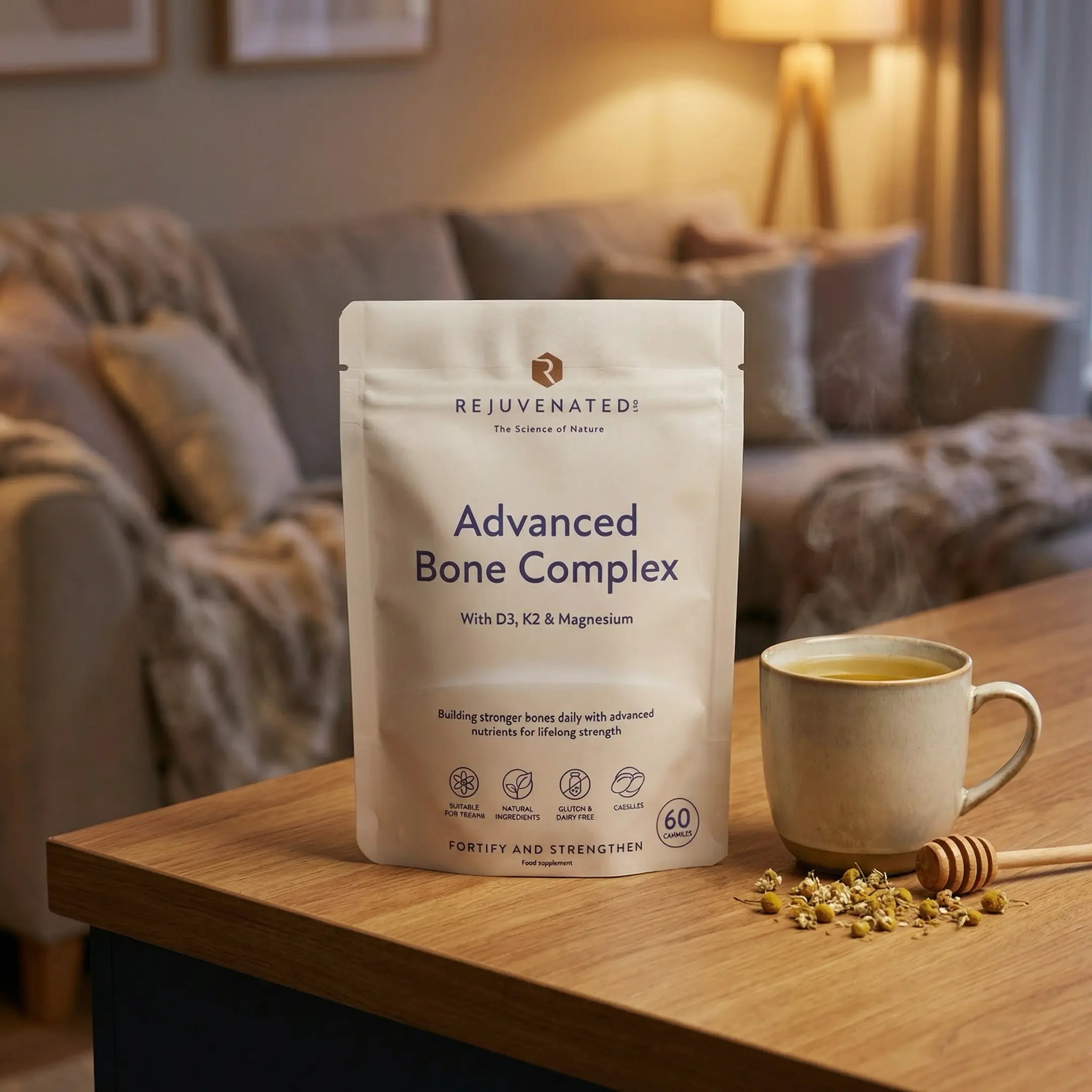
Discover Advanced Bone Complex to support your bone health over the years.


