


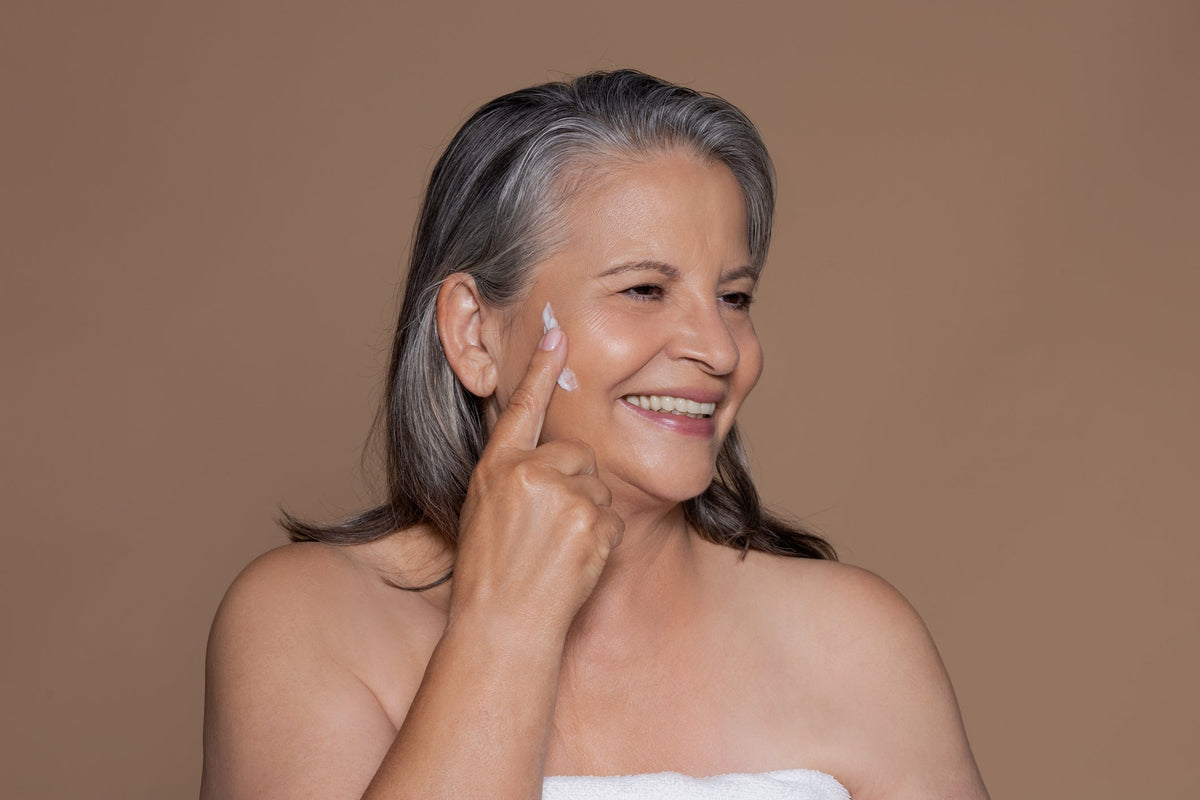
Perimenopause skin changes are shifts in hydration, elasticity and skin texture caused by hormonal fluctuations, particularly declining oestrogen.
Common changes include dryness, fine lines, loss of firmness, increased sensitivity and breakouts. These changes are normal and reflect how the skin responds to internal hormonal shifts.
Perimenopause skin problems
Perimenopause affects the skin because oestrogen supports collagen, hydration and skin repair. As levels decline, these processes slow down.
Collagen production decreases, leading to reduced firmness and elasticity. The skin’s ability to retain moisture also declines, often causing dryness and dullness. At the same time, slower cell turnover can leave the complexion looking tired, while increased sensitivity may lead to irritation or breakouts.
Itchy skin is a common yet often overlooked symptom of menopause, driven largely by the decline in oestrogen. As oestrogen levels fall, the skin produces less collagen and natural oils, leading to dryness, thinning and increased sensitivity. This can result in persistent itching, sometimes described as a crawling or tingling sensation. Supporting skin from within with hydration, essential nutrients and collagen, alongside gentle topical care, can help restore comfort and maintain a healthy skin barrier during this transition.
How can you improve perimenopause skin
You can improve perimenopause skin by supporting collagen, hydration, nutrition and overall skin function from within.
- Support collagen production Collagen helps maintain skin structure, elasticity and smoothness. Supplementing with marine collagen and supporting nutrients such as vitamin C can help reinforce the skin’s foundation over time.
- Improve cellular hydration Hydrated skin starts within. Supporting fluid balance with water and electrolytes helps maintain skin plumpness, smoothness and function.
- Eat an anti-inflammatory diet A diet rich in vegetables, fruits, healthy fats and protein provides antioxidants and nutrients that support skin health. Reducing processed foods and sugar can help minimise inflammation.
- Support gut health The gut–skin connection plays a key role in skin clarity and balance. A healthy gut microbiome can help regulate inflammation and support the skin barrier.
- Prioritise sleep and recovery Skin repair and collagen renewal peak at night. Supporting a consistent sleep routine helps optimise these natural processes.
Can you prevent perimenopause skin ageing?
You cannot stop perimenopause skin ageing, but you can slow and support it. By focusing on collagen support, hydration, nutrition and daily habits, you can help maintain skin strength, resilience and radiance over time.


