


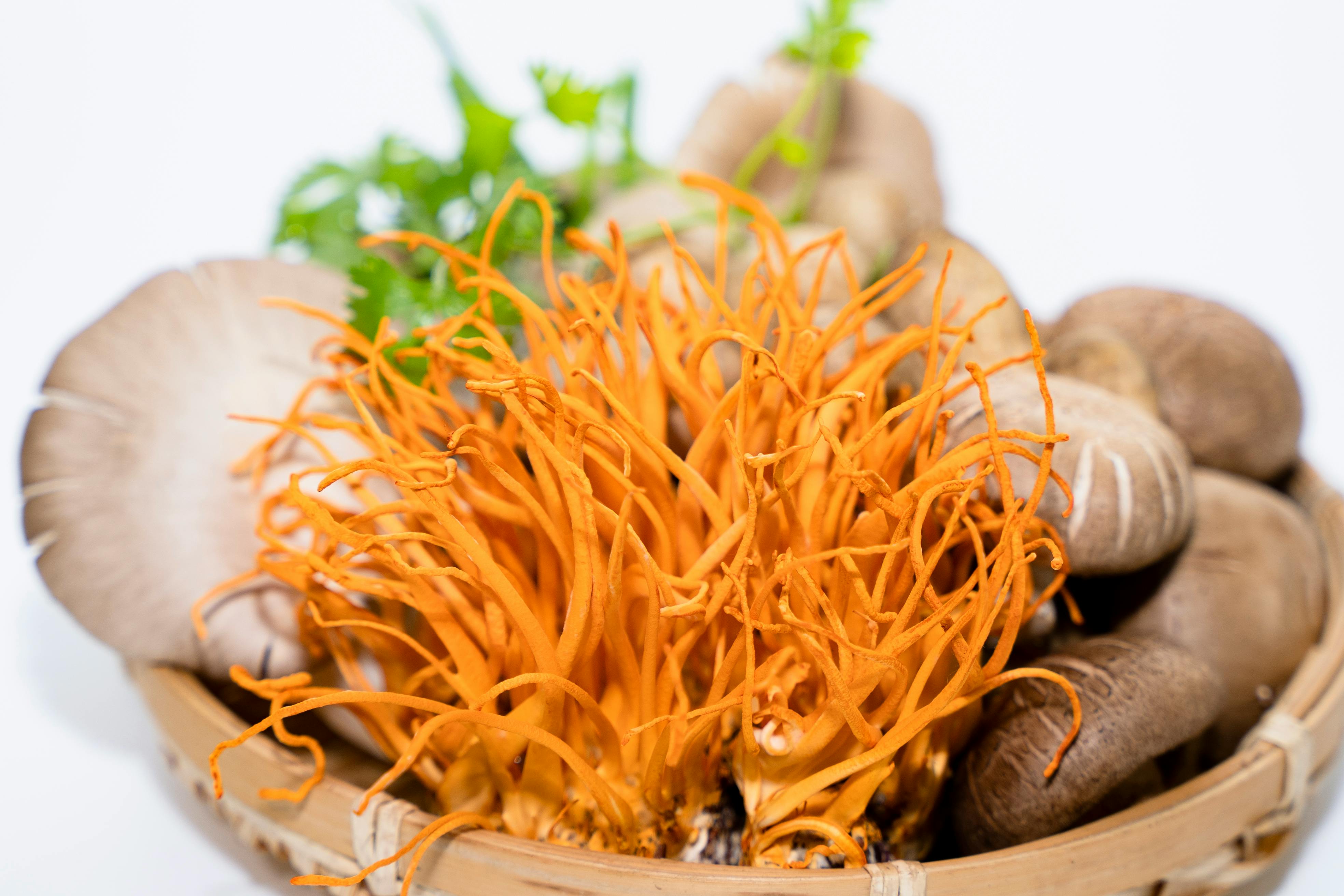
What does cordyceps do?
Cordyceps has a long history in traditional Chinese medicine, where it has been used for vitality and wellbeing. Today, this unusual fungus is attracting interest for its potential effects on immunity, energy and the body’s antioxidant defences. [6]
Traditional accounts describe farmers noticing greater strength in animals that ate cordyceps, before using the fungus in powdered tonics and teas. Modern research asks a more specific question: which of its compounds might explain these effects, and what does the evidence show? Cordyceps benefits are being explored in laboratory experiments, animal studies and small human trials.
Understanding the difference between these types of research can help you make an informed choice about supplements. Cordyceps nutritional compounds Cordycepin is a naturally occurring compound particularly associated with Cordyceps militaris. Structurally similar to adenosine, it can influence cell signalling. Laboratory research has explored its effects on inflammatory pathways; those findings should not be interpreted as established benefits from taking a supplement. [1,9]
Adenosine is also made naturally by your body. It acts as a messenger between cells and forms part of ATP, the molecule cells use to transfer energy. Its presence in cordyceps does not, by itself, demonstrate that a supplement will increase your energy levels. [10]
Polysaccharides are long chains of sugar molecules. Some cordyceps polysaccharides have been studied for their interaction with immune-cell receptors and antioxidant systems. [4]
Cordyceps benefits for immune function
Your innate immune system provides a rapid first response to potential threats. It includes macrophages, which engulf microbes and cellular debris, and natural killer (NK) cells, which help identify and destroy infected or abnormal cells. Cordyceps research explores how its compounds influence these defences. [1,]
Cordycepin has reduced inflammatory signalling in laboratory-grown macrophages by suppressing NF-κB, a pathway that helps switch on inflammatory responses. Cordyceps polysaccharides can also interact with receptors on macrophages and influence their activity. These different effects help explain the term “immune modulation”: the response depends on the compound and experimental conditions.
A small placebo-controlled trial found increased NK cell activity in healthy men taking a Cordyceps militaris preparation for four weeks. This tested a mushroom preparation, rather than isolated cordycepin, and did not establish that users caught fewer infections. For a broader look at everyday immune health, read why do I keep getting sick?.
Cordyceps and antioxidant activity
Oxidative stress occurs when reactive molecules overwhelm the body’s antioxidant defences. Animal research has found that cordyceps polysaccharides can increase the activity of antioxidant enzymes, including glutathione peroxidase. These findings are interesting, and more tests need to be done to verify that cordyceps supplements slow skin ageing in people.
Cordyceps for energy and exercise performance
Some small studies suggest potential exercise benefits. In a 12-week pilot trial involving adults aged 50–75, a cultured preparation called Cs-4 improved certain exercise thresholds, but did not improve maximum oxygen uptake. Results across studies are mixed, so cordyceps cannot be relied on to boost everyday energy or athletic performance. [5]
Cordyceps and blood sugar
Researchers have investigated how cordyceps polysaccharides affect glucose metabolism and insulin resistance in diabetic mice. These animal findings do not establish cordyceps as a treatment for diabetes or prove that it regulates blood sugar in people. [7]
If blood sugar and energy are your focus, our Re-set formula offers a separate approach. It contains chromium, which contributes to the maintenance of normal blood glucose levels, and copper, which contributes to normal energy-yielding metabolism. [8]
Cordyceps nutritional compounds
Cordyceps sinensis and Cordyceps militaris Cordyceps sinensis, now called Ophiocordyceps sinensis, is the fungus traditionally associated with caterpillars in high-altitude Asian regions. Wild material is scarce; supplements often use cultivated fungal material. Cs-4 is one researched fermentation preparation associated with this tradition, rather than the wild fungus itself.
Cordyceps militaris is a different species that can be cultivated more readily. It is particularly associated with cordycepin, while levels in sinensis material can be very low or undetectable. [9]
Sinensis-associated preparations have a longer clinical research history, while militaris has been studied for cordycepin and human immune markers.
How to get the benefits of cordyceps
Wild cordyceps was traditionally gathered as a fungus growing on caterpillars. Many modern supplement preparations are cultivated under controlled conditions, making them more accessible. Cordyceps is available in capsules, powders and extracts, and has also been consumed in teas.
Cordyceps dosage and choosing a supplement There is no universally established daily dose. Examples from human studies include 1.5 g daily of a militaris preparation and approximately 3 g daily of Cs-4. These illustrate a research range of around 1.5–3 g, rather than a recommended dose for every product. Concentrated extracts and raw powders are not interchangeable.
Raw powder is dried fungal material, while an extract concentrates selected constituents. Look for the species, amount per serving, fungal material used and any declared standardisation, such as measured cordycepin or beta-glucan content. Standardisation describes consistency of composition; it does not guarantee a health benefit. Ask about testing for identity and contaminants.
Follow the product label. Check with a healthcare professional before use if you take medicines, particularly blood thinners or diabetes medication. Immune Complex should not be taken during pregnancy or breastfeeding.
Which Rejuvenated supplement contains cordyceps
Our Immune Complex contains cordyceps alongside beta-glucans, botanicals and nutrients. Its vitamins C and D, zinc and selenium contribute to normal immune-system function. Follow the current pack directions; research doses for standalone cordyceps preparations should not be used to increase your dose of this multi-ingredient formula.
Cordyceps has a long history in traditional Chinese medicine, where it has been used for vitality and wellbeing. Today, this unusual fungus is attracting interest for its potential effects on immunity, energy and the body’s antioxidant defences.
Traditional accounts describe farmers noticing greater strength in animals that ate cordyceps, before using the fungus in powdered tonics and teas. Modern research asks a more specific question: which of its compounds might explain these effects, and what does the evidence show? Cordyceps benefits are being explored in laboratory experiments, animal studies and small human trials.
Understanding the difference between these types of research can help you make an informed choice about supplements. Cordyceps nutritional compounds Cordycepin is a naturally occurring compound particularly associated with Cordyceps militaris. Structurally similar to adenosine, it can influence cell signalling. Laboratory research has explored its effects on inflammatory pathways; those findings are yet to be confirmed when taking a supplement.
Adenosine is also made naturally by your body. It acts as a messenger between cells and forms part of ATP, the molecule cells use to transfer energy. Its presence in cordyceps does not, by itself, demonstrate that a supplement will increase your energy levels. [10] Polysaccharides are long chains of sugar molecules.
Some cordyceps polysaccharides have been studied for their interaction with immune-cell receptors and antioxidant systems. Their properties vary with their structure and how they are extracted, which is why different preparations may produce different results.
Cordyceps benefits for immune function Your innate immune system provides a rapid first response to potential threats. It includes macrophages, which engulf microbes and cellular debris, and natural killer (NK) cells, which help identify and destroy infected or abnormal cells. Cordyceps research explores how its compounds influence these defences.
Cordycepin has reduced inflammatory signalling in laboratory-grown macrophages by suppressing NF-κB, a pathway that helps switch on inflammatory responses. Cordyceps polysaccharides can also interact with receptors on macrophages and influence their activity. These different effects help explain the term “immune modulation”: the response depends on the compound and experimental conditions.
A small placebo-controlled trial found increased NK cell activity in healthy men taking a Cordyceps militaris preparation for four weeks. This tested a mushroom preparation, rather than isolated cordycepin, and did not establish that users caught fewer infections. For a broader look at everyday immune health, read why do I keep getting sick?.
Cordyceps and antioxidant activity
Oxidative stress occurs when reactive molecules overwhelm the body’s antioxidant defences. Studies have found that cordyceps polysaccharides can increase the activity of antioxidant enzymes, including glutathione peroxidase. While interesting more thorough testing needs to take place. [4]
Cordyceps for energy and exercise performance
Some small studies suggest potential exercise benefits. In a 12-week pilot trial involving adults aged 50–75, a cultured preparation called Cs-4 improved certain exercise thresholds, but did not improve maximum oxygen uptake.
Cordyceps and blood sugar
Researchers have investigated how cordyceps polysaccharides affect glucose metabolism and insulin resistance in diabetic mice. More studies need to be carried out to establish if cordyceps is successful as a treatment for diabetes or prove that it regulates blood sugar in people.
If blood sugar and energy are your focus, our Re-set formula offers a separate approach. It contains chromium, which contributes to the maintenance of normal blood glucose levels, and copper, which contributes to normal energy-yielding metabolism. Its current ingredient list does not include cordyceps. [8]
Cordyceps sinensis and Cordyceps militaris
Cordyceps sinensis, now called Ophiocordyceps sinensis, is the fungus traditionally associated with caterpillars in high-altitude Asian regions. Wild material is scarce; supplements often use cultivated fungal material. Cs-4 is one researched fermentation preparation associated with this tradition, rather than the wild fungus itself. [5,6]
Cordyceps militaris is a different species that can be cultivated more readily. It is particularly associated with cordycepin, while levels in sinensis material can be very low or undetectable. [9] Sinensis-associated preparations have a longer clinical research history, while militaris has been studied for cordycepin and human immune markers.
How to get the benefits of cordyceps
Wild cordyceps was traditionally gathered as a fungus growing on caterpillars. Many modern supplement preparations are cultivated under controlled conditions, making them more accessible. Cordyceps is available in capsules, powders and extracts, and has also been consumed in teas. Cordyceps dosage and choosing a supplement
There is no universally established daily dose. Examples from human studies include 1.5 g daily of a militaris preparation and approximately 3 g daily of Cs-4. These illustrate a research range of around 1.5–3 g, rather than a recommended dose for every product. Concentrated extracts and raw powders are not interchangeable.
Raw powder is dried fungal material, while an extract concentrates selected constituents. Look for the species, amount per serving, fungal material used and any declared standardisation, such as measured cordycepin or beta-glucan content. Standardisation describes consistency of composition; it does not guarantee a health benefit.
Ask about testing for identity and contaminants. Follow the product label. Check with a healthcare professional before use if you take medicines, particularly blood thinners or diabetes medication. Immune Complex should not be taken during pregnancy or breastfeeding.
Which Rejuvenated supplement contains cordyceps
Our Immune Complex contains the whole form of cordyceps sinesis. Using the whole ingredient brings together a range of naturally occurring constituents, including polysaccharides and adenosine, rather than focusing on one isolated compound. It sits alongside beta-glucans, carefully selected botanicals and vitamins C and D, zinc and selenium, which contribute to the normal function of the immune system.
Follow the current pack directions; research doses for standalone cordyceps preparations should not be used to increase your dose of this multi-ingredient formula.


