


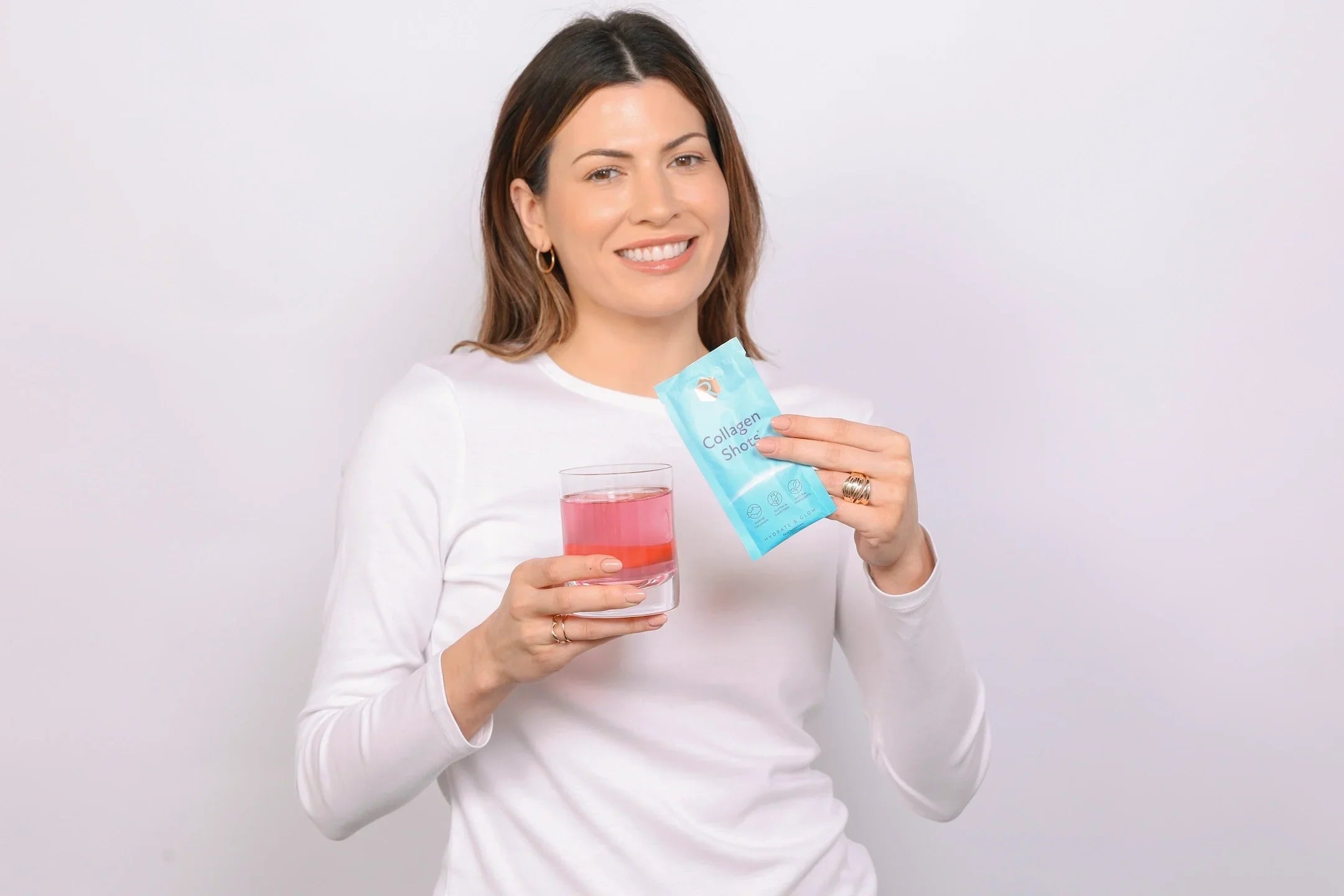
Collagen is often positioned as a “beauty” ingredient, but the science tells a much bigger story. When we look at collagen and ageing, we’re not just talking about skin. We’re talking about the very structure of the body: your joints, bones, muscles, gut lining and connective tissue.
So, does collagen slow ageing? The answer is nuanced, but increasingly compelling.
Collagen: the structural foundation of longevity
Collagen is the most abundant protein in the body, forming the scaffolding that holds everything together - from skin and tendons to bones and the gut lining. As we age, natural collagen production declines by around 1-1.5% per year, contributing to visible ageing, reduced joint resilience and weaker connective tissue.
This is why collagen is now being reframed in longevity science - not as a cosmetic add-on, but as a foundational pillar of healthspan.
At a biological level, ageing is partly a story of structural breakdown. Research shows that changes in collagen and elastin networks directly influence how tissues age, impacting everything from skin elasticity to mechanical strength.
Where the science is strong
There is solid and growing evidence that collagen supports multiple aspects of healthy ageing:
- Skin health: Clinical studies show improvements in hydration, elasticity and wrinkle depth within 8–12 weeks of supplementation.
- Joint health: Collagen peptides have been shown to reduce joint pain and improve function, particularly in ageing populations.
- Bone and muscle: Collagen is a key component of bone structure and connective tissue, supporting strength and resilience.
- Gut integrity: As a major part of the gut lining, collagen-derived amino acids (like glycine) help support barrier function and reduce inflammation (emerging but well-supported mechanistically).
Importantly, large reviews highlight that collagen works best when viewed as deep tissue support, not a quick cosmetic fix.
Collagen and biological age: the emerging science
One of the most exciting developments in collagen longevity research is its potential impact on biological age.
A 2025 clinical observational trial found that targeted collagen amino acid supplementation reduced biological age by approximately 1.4 years over six months, alongside improvements in skin quality.
This suggests collagen may influence ageing at a deeper, systemic level - potentially through improved cellular signalling, reduced inflammation and better structural integrity.
However, it’s important to realise that this is an emerging area of research and larger, long-term human trials are still needed
What the science doesn’t yet prove
While collagen clearly supports structural health, it is not a standalone anti-ageing solution.
- It doesn’t “stop” ageing
- It works best alongside nutrition, sleep and lifestyle
- Claims around dramatic rejuvenation should be treated with caution
Similarly, while NAD+ boosters (like NMN) show promise in cellular ageing, human evidence is still developing compared to collagen’s more established structural role.
Why collagen should be a daily foundation
Rather than viewing collagen as a trend, it’s more accurate to see it as nutritional maintenance for your body’s framework. Daily supplementation helps provide the amino acid building blocks needed to support:
- Connective tissue repair
- Joint and muscle resilience
- Skin structure and hydration
- Gut lining integrity
This is where consistency matters. Most benefits are seen over 8-12 weeks and beyond, not overnight.
Clinical evidence: why consistency matters
One of the most important things to understand about collagen supplementation is that results are cumulative. Collagen works by supplying the body with the amino acid building blocks needed to support ongoing repair and renewal processes, which is why visible improvements are typically seen over weeks rather than days.
This is also reflected in clinical research. In a third-party clinical trial using Rejuvenated Collagen Shots, participants experienced measurable improvements in multiple areas associated with healthy ageing and skin quality after consistent use:
- 93% reported improved skin elasticity
- 86% saw an improvement in skin radiance
- 86% experienced improved skin hydration and moisture levels
- 86% reported an overall improvement in appearance

These findings support the wider body of collagen research showing that targeted collagen peptide supplementation may help improve skin structure, hydration and resilience over time.
Importantly, collagen should not be viewed as a “quick fix” beauty product. The most significant benefits are typically seen when collagen becomes part of a longer-term wellness routine alongside nutrition, sleep, hydration and lifestyle factors that support healthy ageing from within.
Collagen and a longevity protocol
In a modern longevity routine, collagen sits alongside hydration, cellular energy and sleep.
A daily collagen supplement like Collagen Shots fits naturally into this approach - delivering a high-strength, bioavailable source of collagen peptides alongside key co-factors like vitamin C, which supports normal collagen formation.
When combined with:
- Cellular support (e.g. NAD+ pathways)
- Hydration and electrolytes
- Sleep and circadian alignment
…it becomes part of a whole-body longevity strategy, not just a beauty ritual.
The bottom line
Collagen is not a miracle cure - but it is far more than a cosmetic supplement. The strongest science shows it supports the structure of ageing well: skin, joints, bones and connective tissue. Emerging research suggests it may even influence biological age, but this is still evolving.
If longevity is about maintaining strength, resilience and function over time, then collagen isn’t optional. It’s foundational.


